Theory /04
A multi-scalar gaze, from the 1:1 to the urban. Thinking from the inhabiting body, from the object to the city. Theory feeds the project, and the project tests the theory.
An inductive line of thought carried out over nine months: a back-and-forth between the sensory, the atlas of atmospheres, the readings and the field.
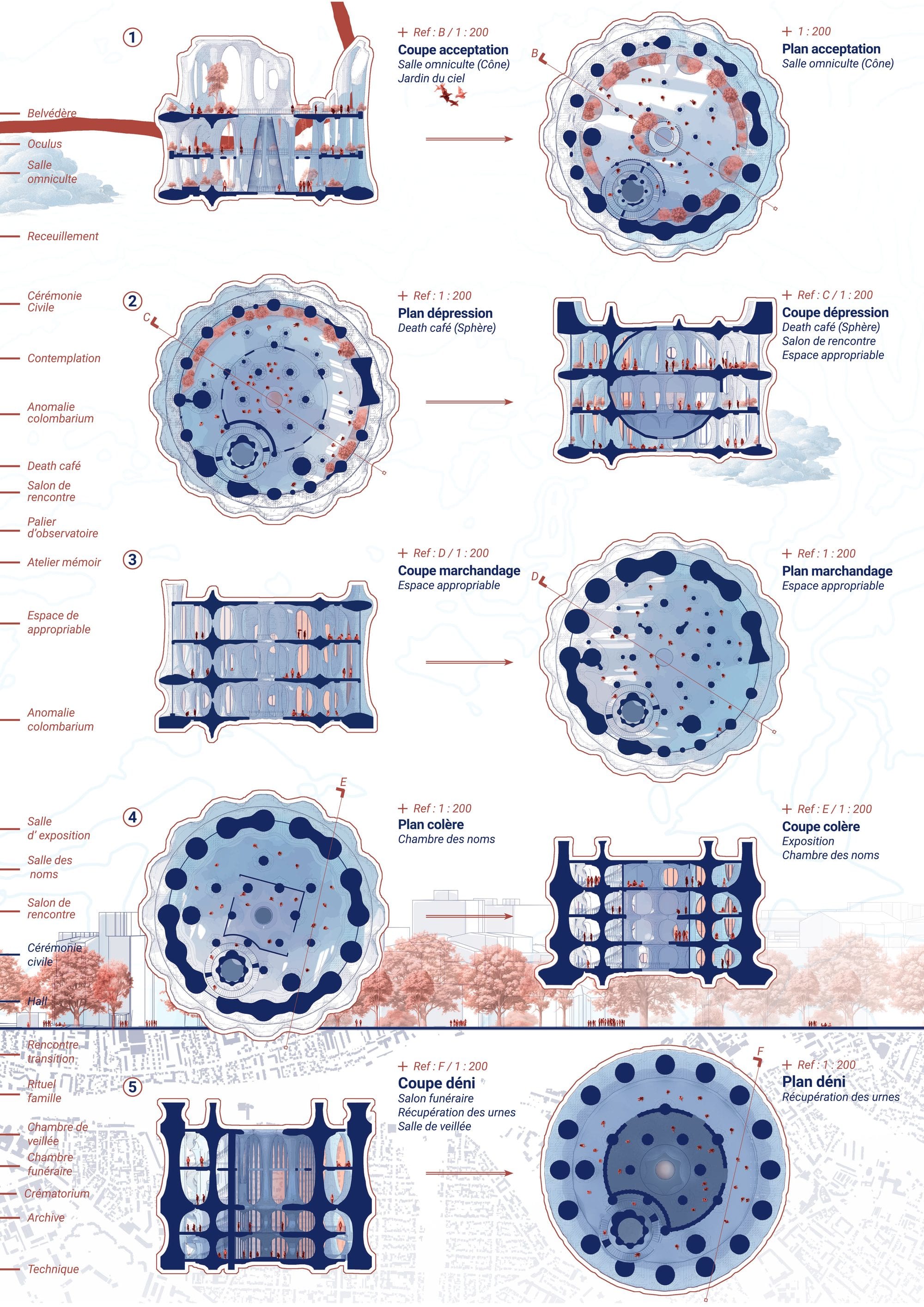
A 276.5 m funerary tower, Porte de Charenton, Paris 12ᵉ. An above-ground core sampling that extracts what the city buries: grief, memory, ritual.
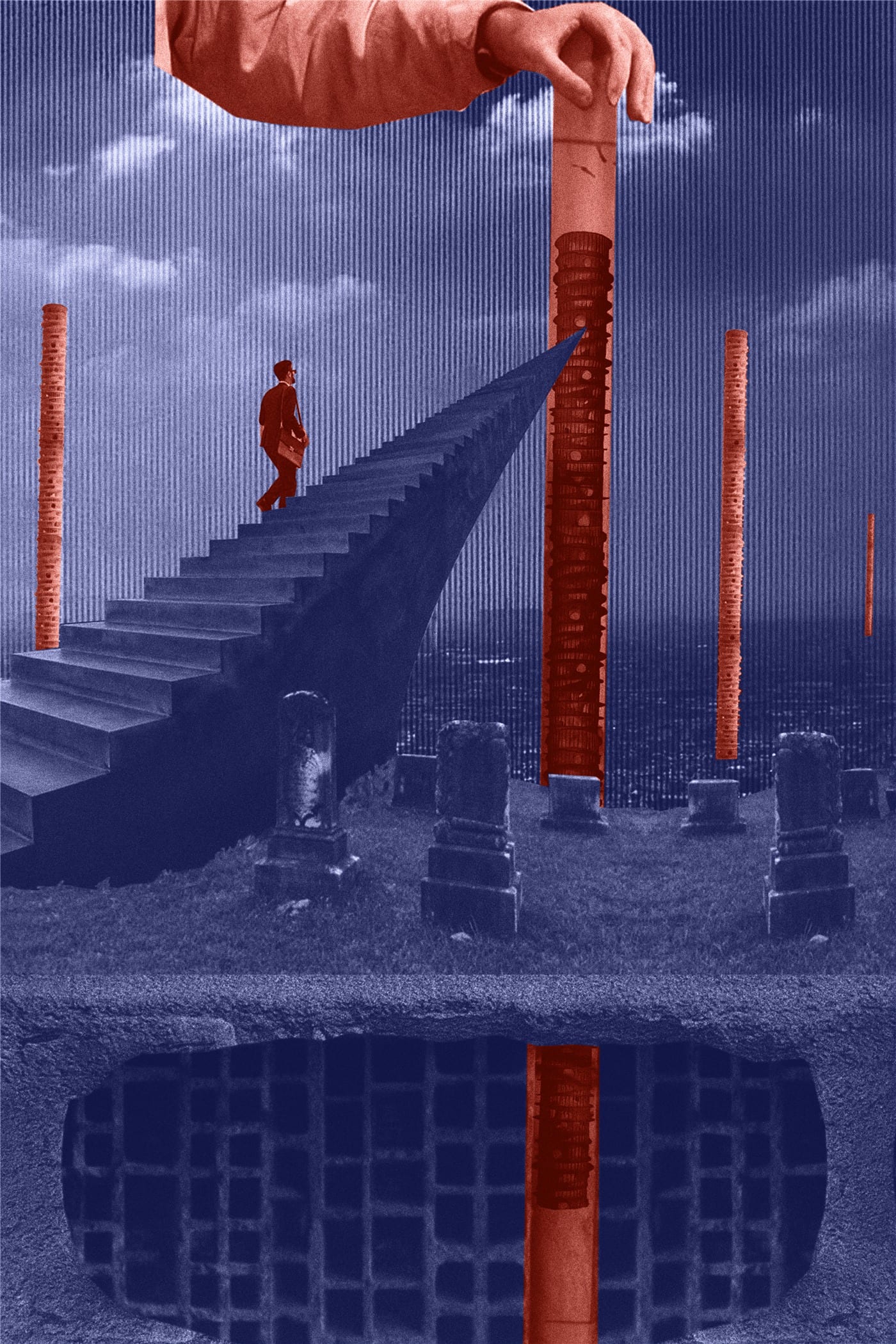
“We perceive life as an ascent. Why should death be a descent?”
What can funerary architecture do when it no longer merely receives the dead, but seeks to give them back a spatial, ritual and symbolic place in the contemporary metropolis?
Verticality, within the density of the city, can reconstitute a triad that the horizontal can no longer allow. Height alone solves nothing: it is its architecture that makes it an answer.
Researching by making
This dissertation began with a question that took time to take shape: where do the dead go in a city that no longer has room for them? The research does not start from a brief but from the sensible: poems, an atlas of images, then an intuition, verticality and death are intimately linked.
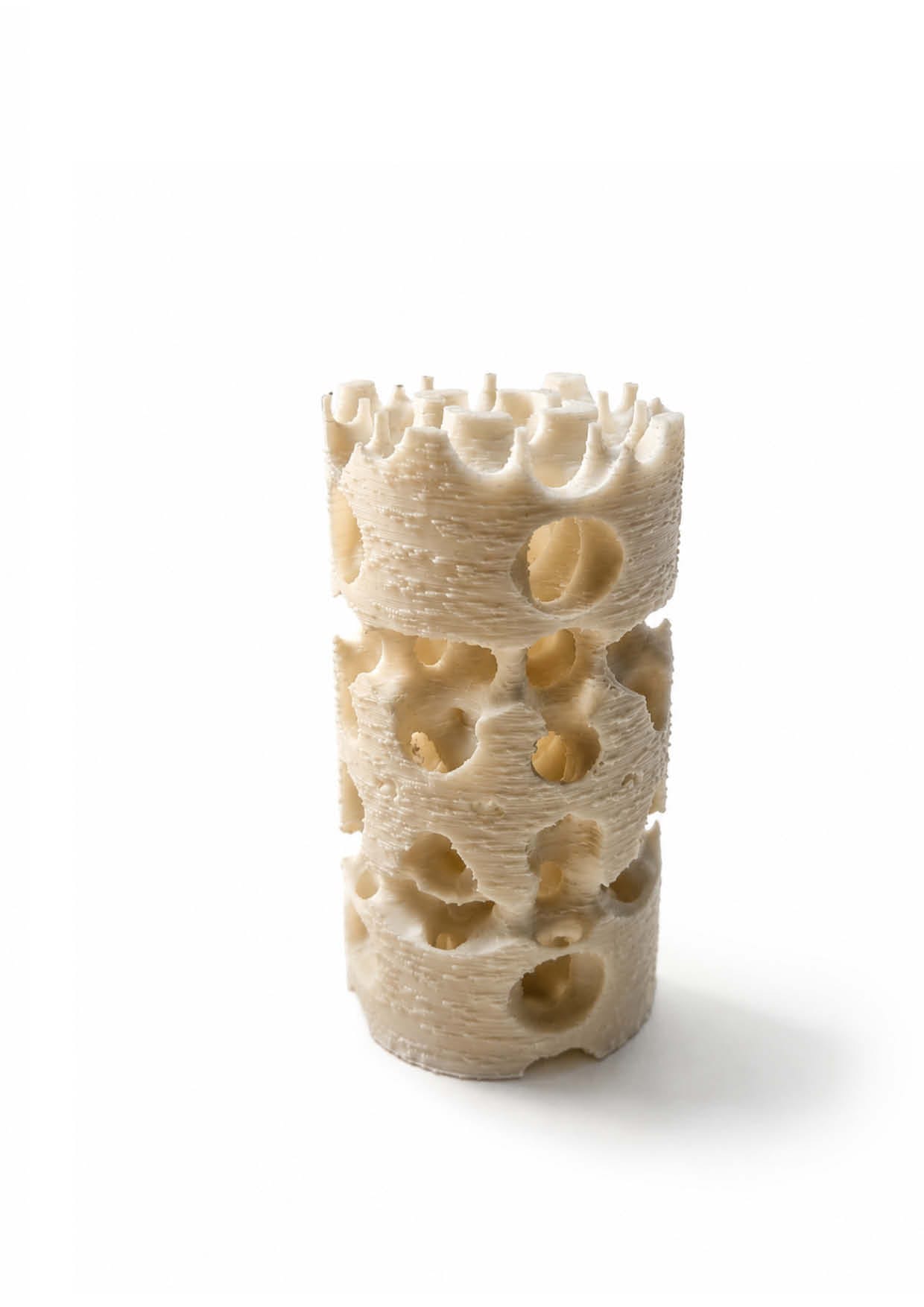
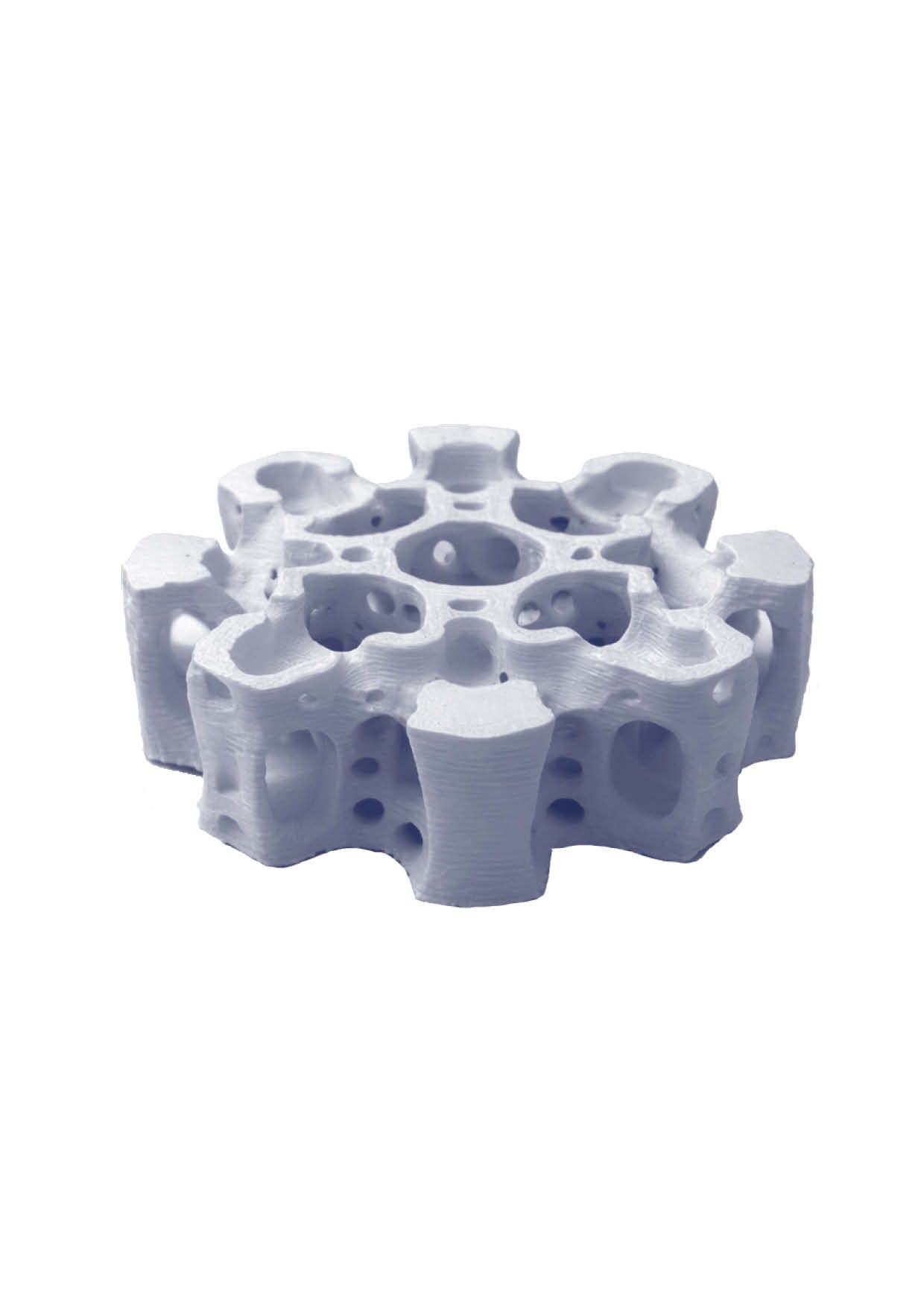
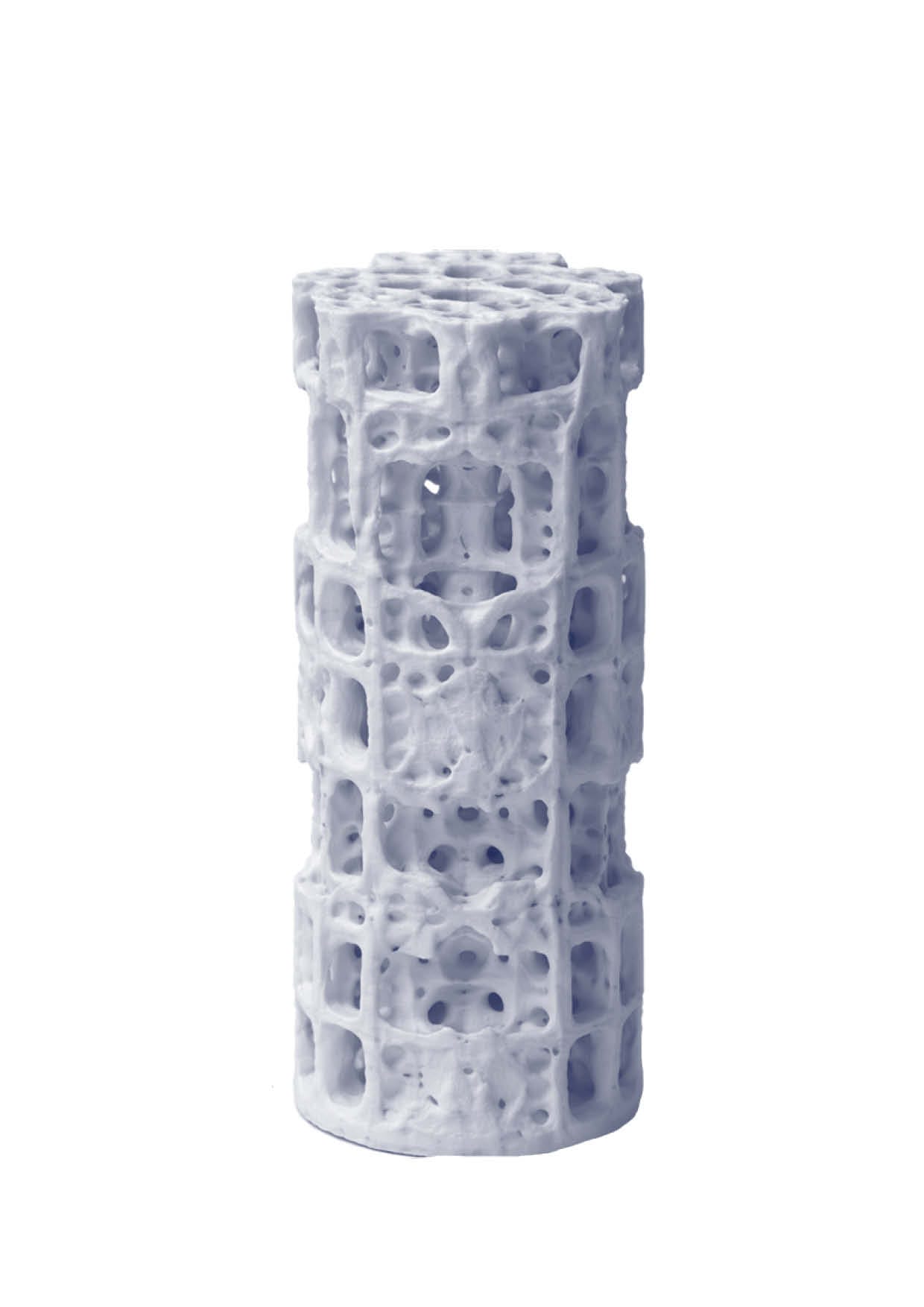
For nine months, research and project moved forward together. Everything passes through the material: a dozen models, linocut, collages. Code became an intermediate language, nearly 5,500 lines of Python in Blender to test the forms. The tool invents nothing: I decide, it executes.
The dissertation, to leaf through
“Raising a place for absence” · 358 pages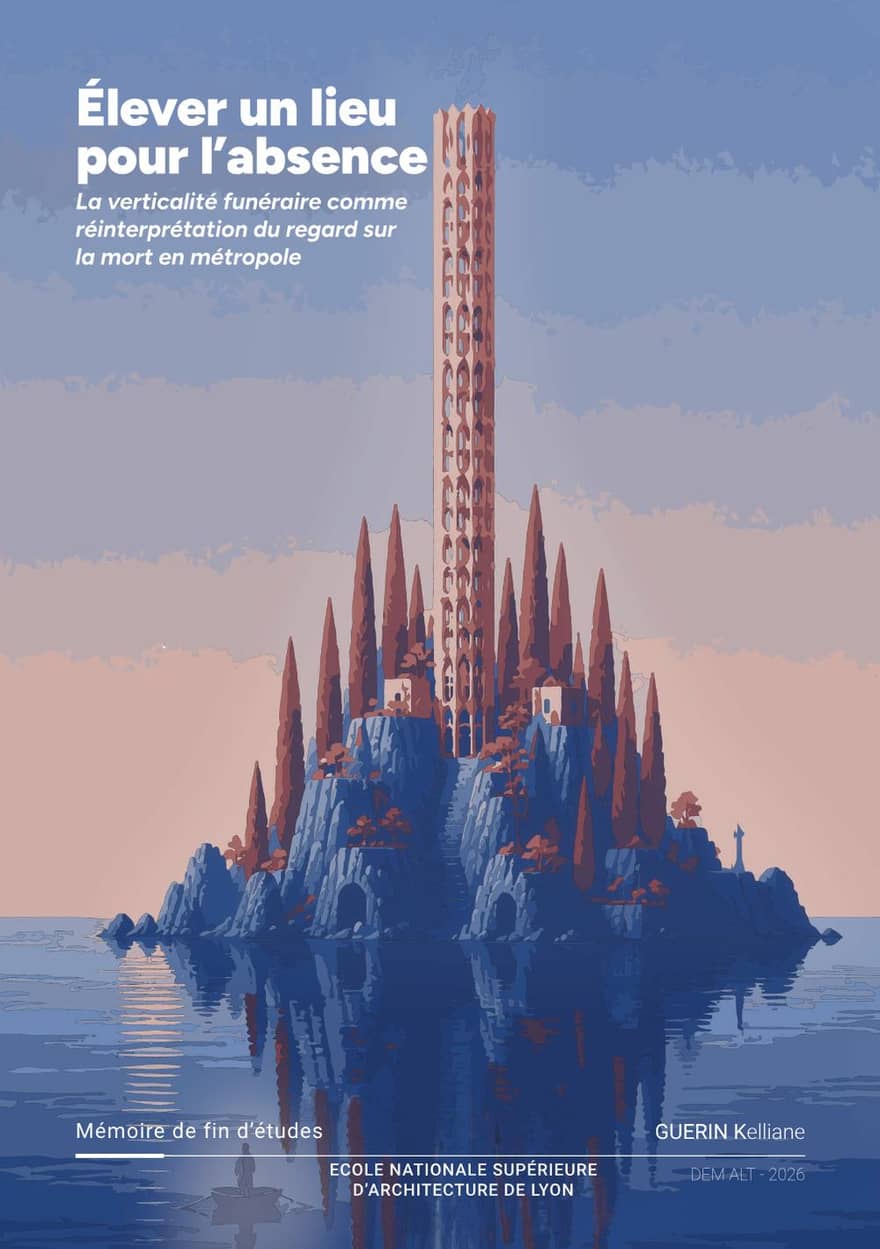
Not science fiction: the extension of figures already here. A manifesto-narrative, halfway between speculative fiction and an architectural scenario, making visible what we would rather not look at.
We take a soil core and extrude it toward the sky: what we bury, we raise and show. What remained hidden becomes shared again.
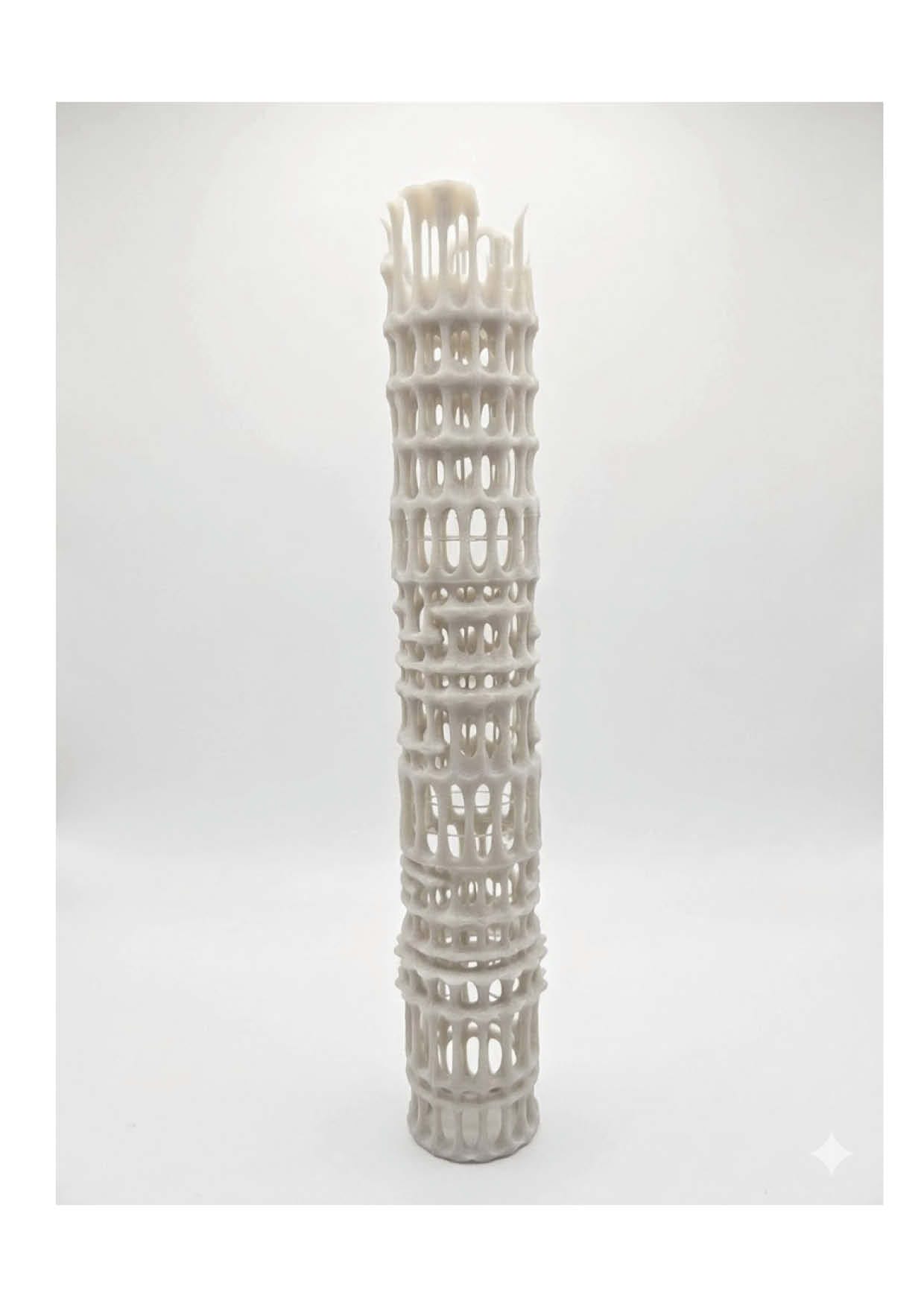
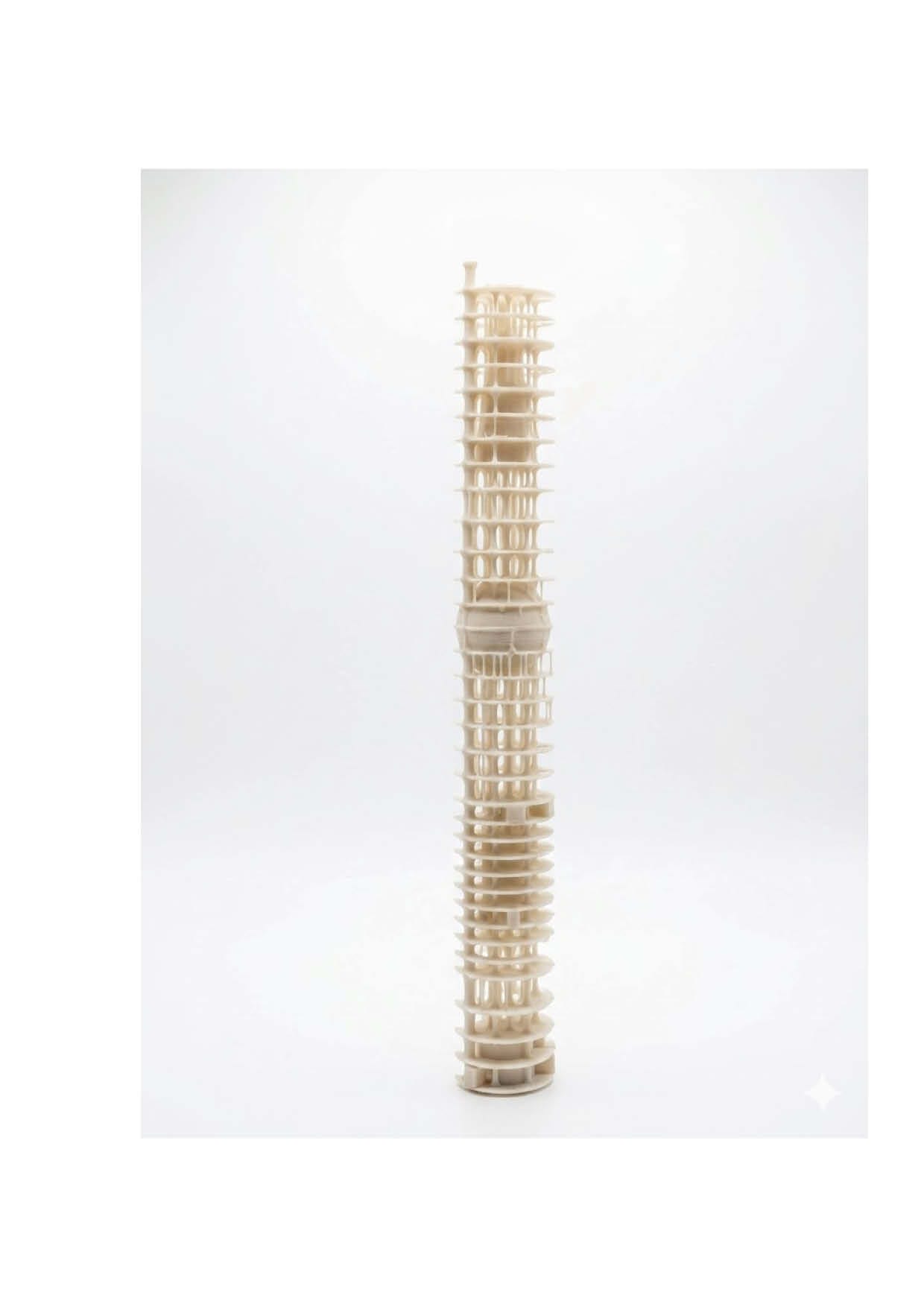
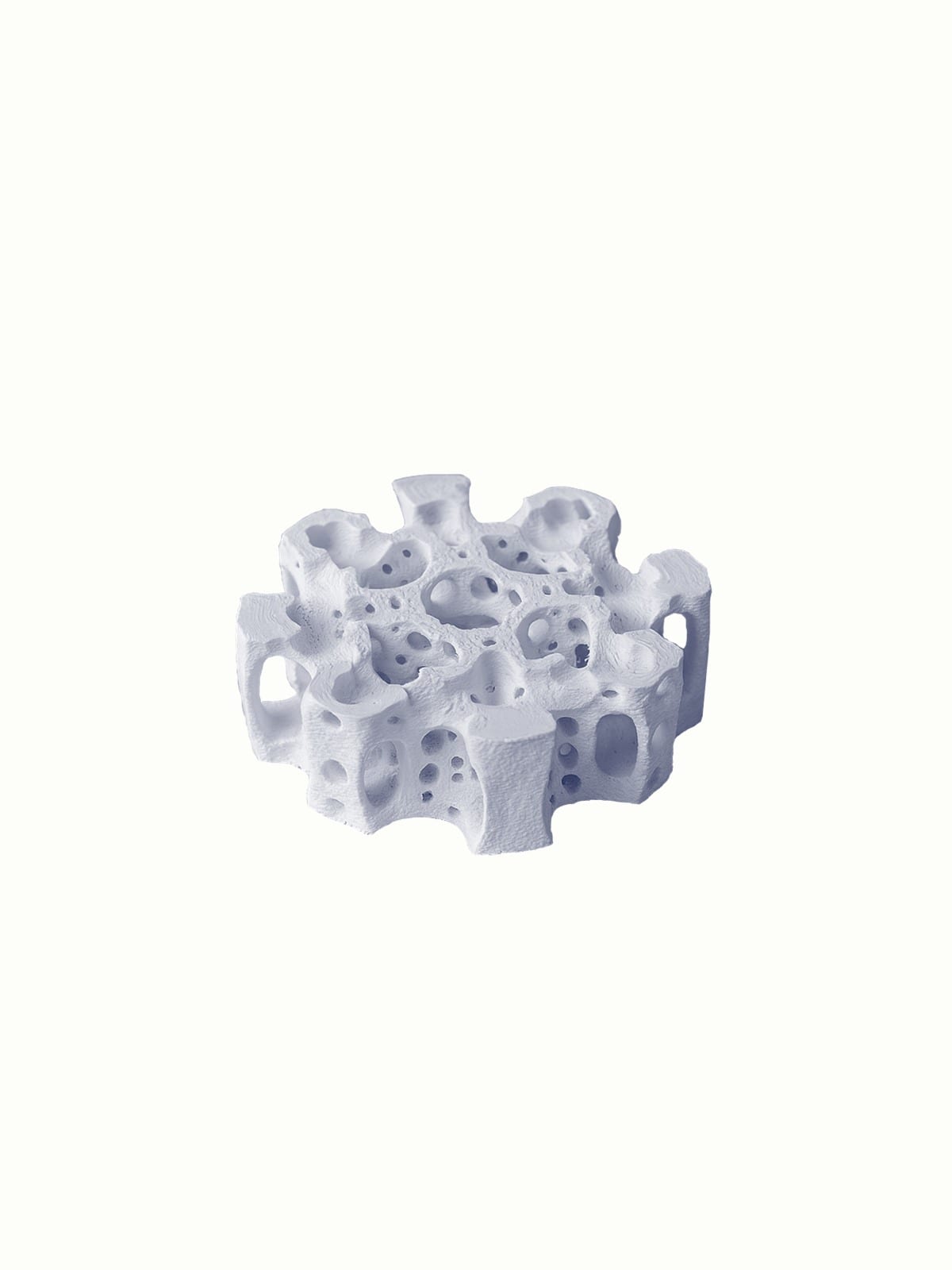
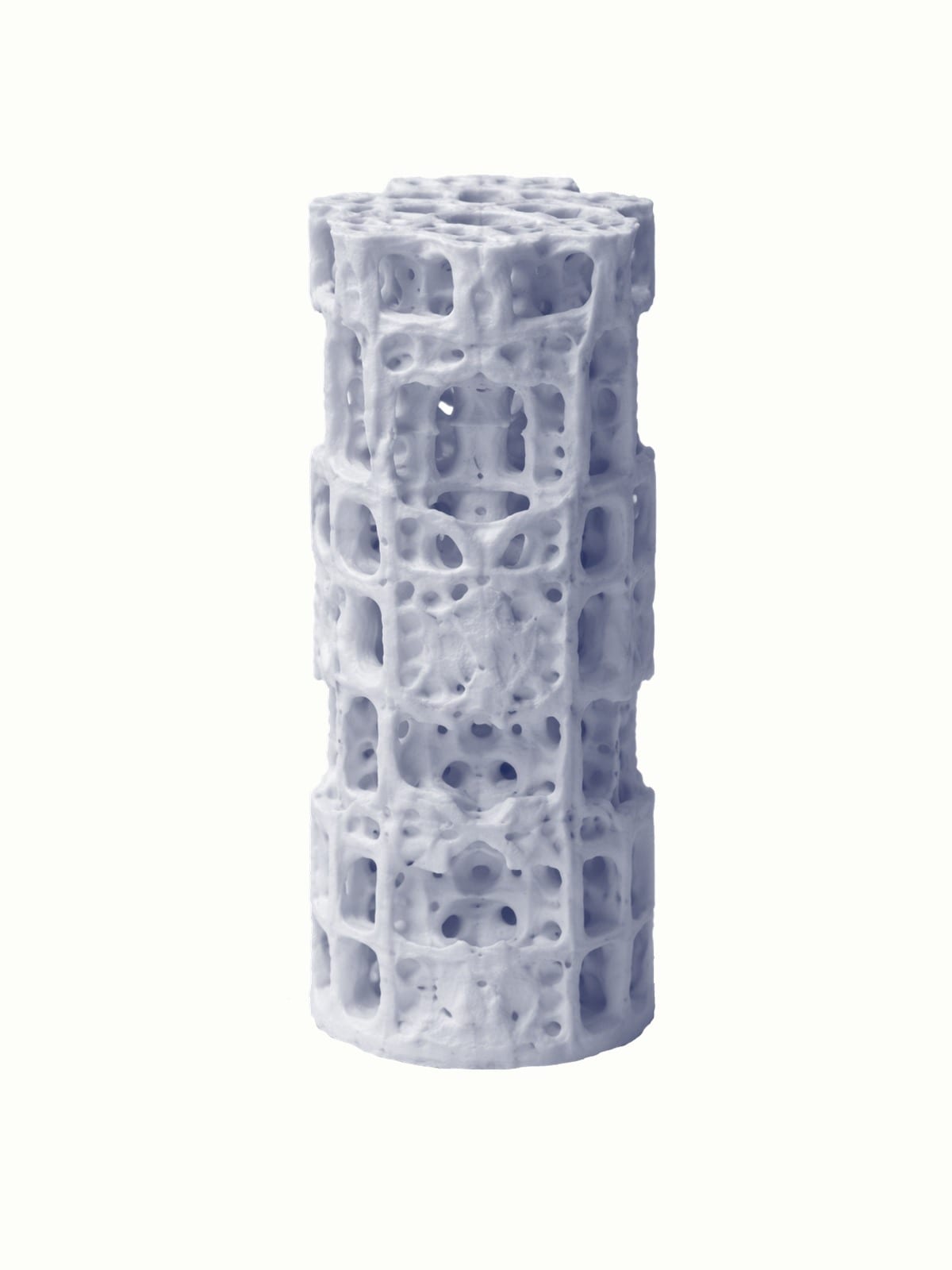
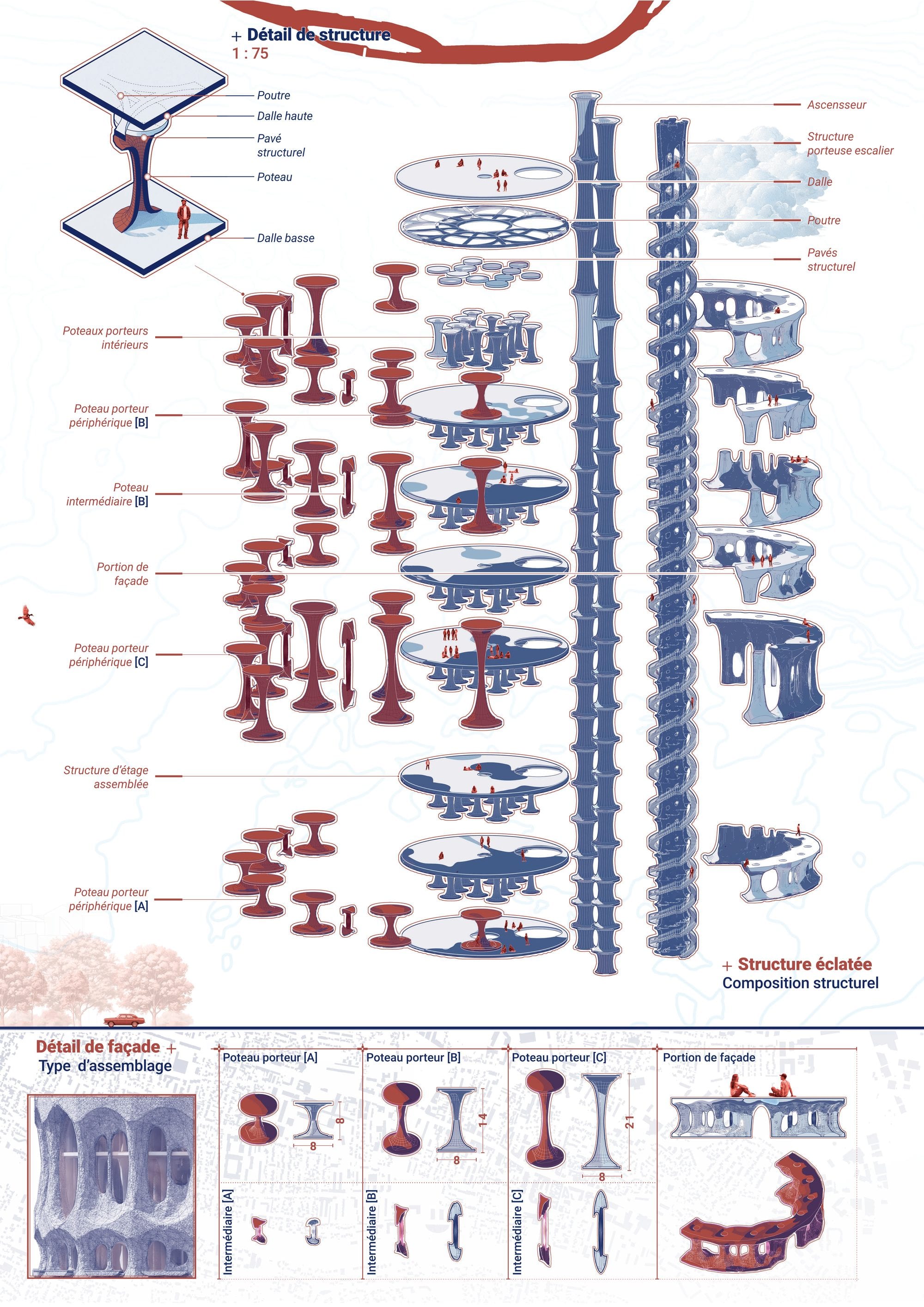
Up close, the tower becomes bony, an inverted cave. The columns follow the gravitational logic of bone: massive at the base, they taper as they rise. The column is conceived as a femur, the geometry of a bone translated into code and then adapted to the loads. The cylinder, an urban fact, has no façade: it converses in every direction.
A threshold between Paris and its outside for centuries. The block, a wasteland backing onto the cimetière de Valmy, a stone’s throw from the bois de Vincennes. Across the way, Jean Nouvel’s Duo towers: the tower does not fall from the sky, it inscribes itself within a line of heights already there.
Two funerary worlds set side by side: the horizontal that exists, the vertical that I propose. No wall, no fence: we own it.
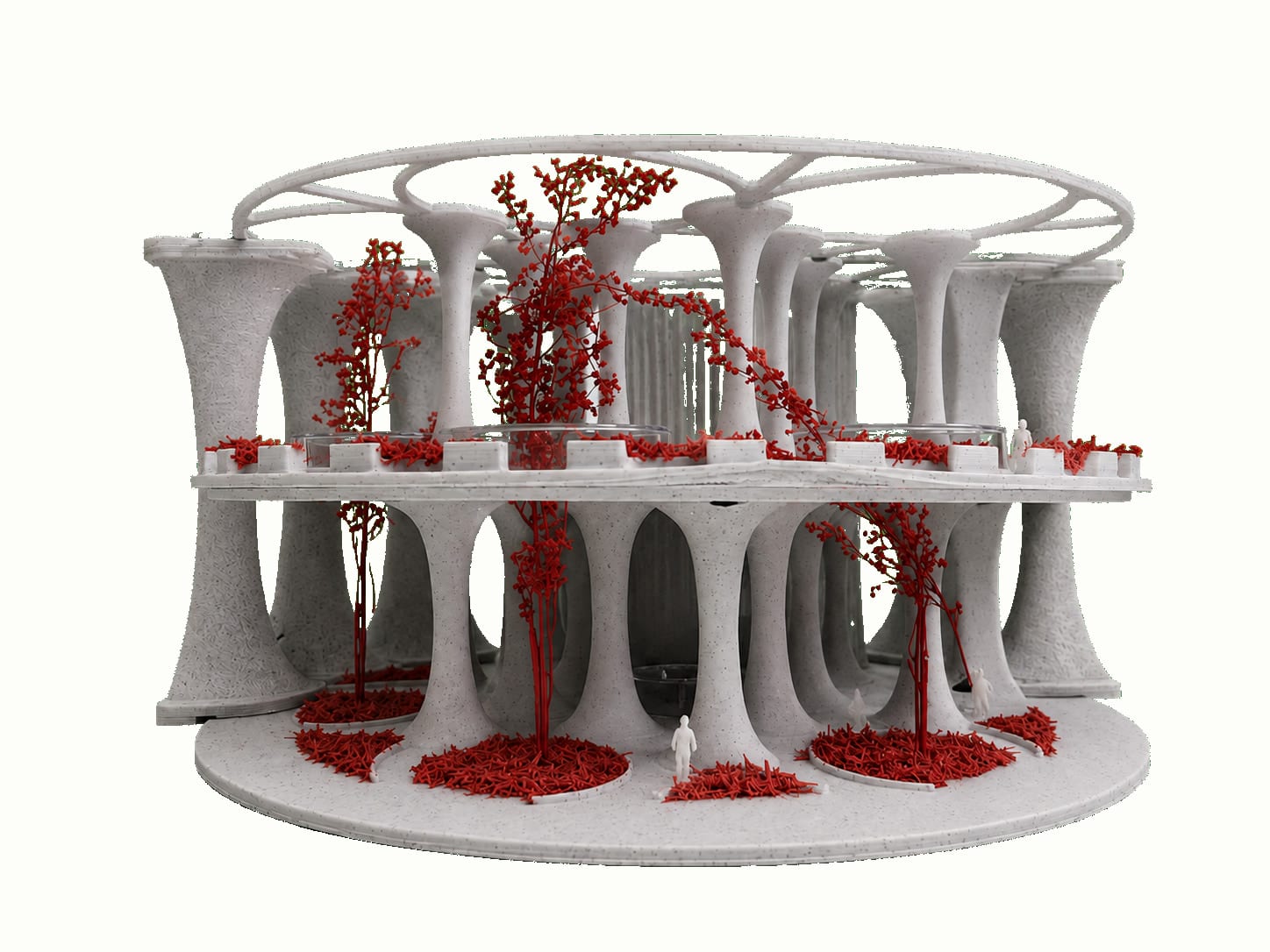
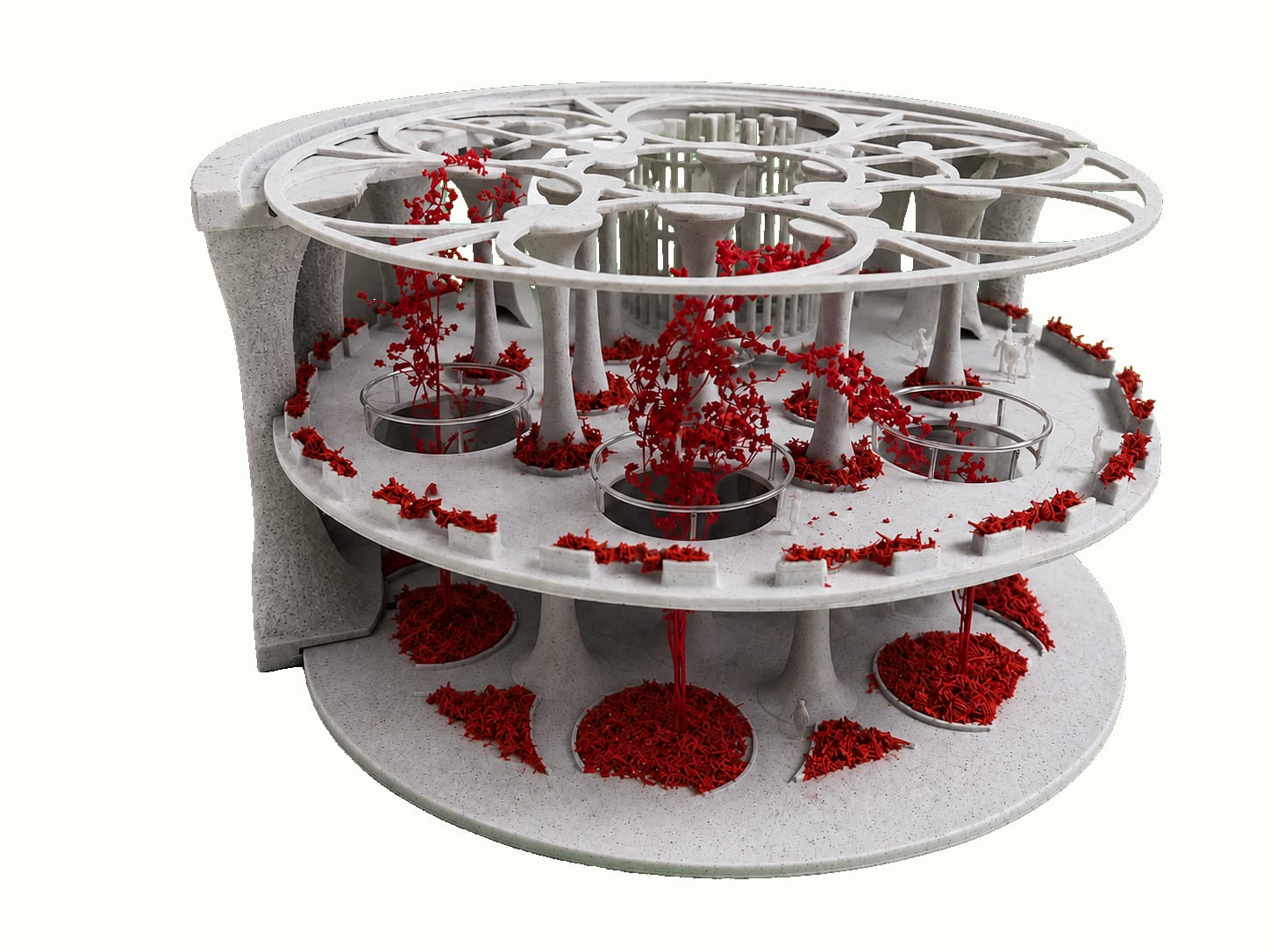
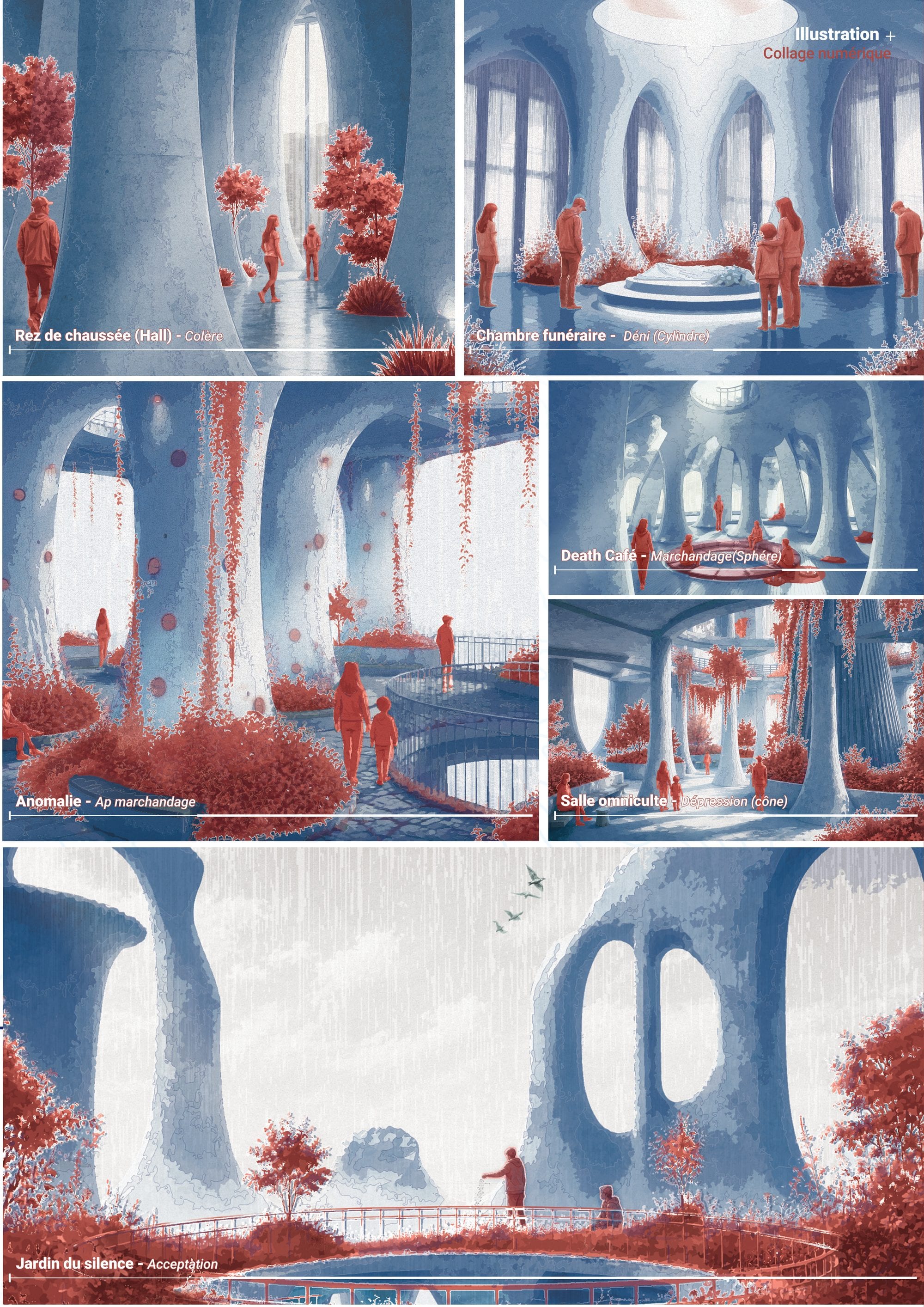
The model says what no drawing shows: the structure is white and bare, and it is the planting, in red, that occupies the floors. Seen from above, the tower reads as an extracted core, its rings stacked around the central void.
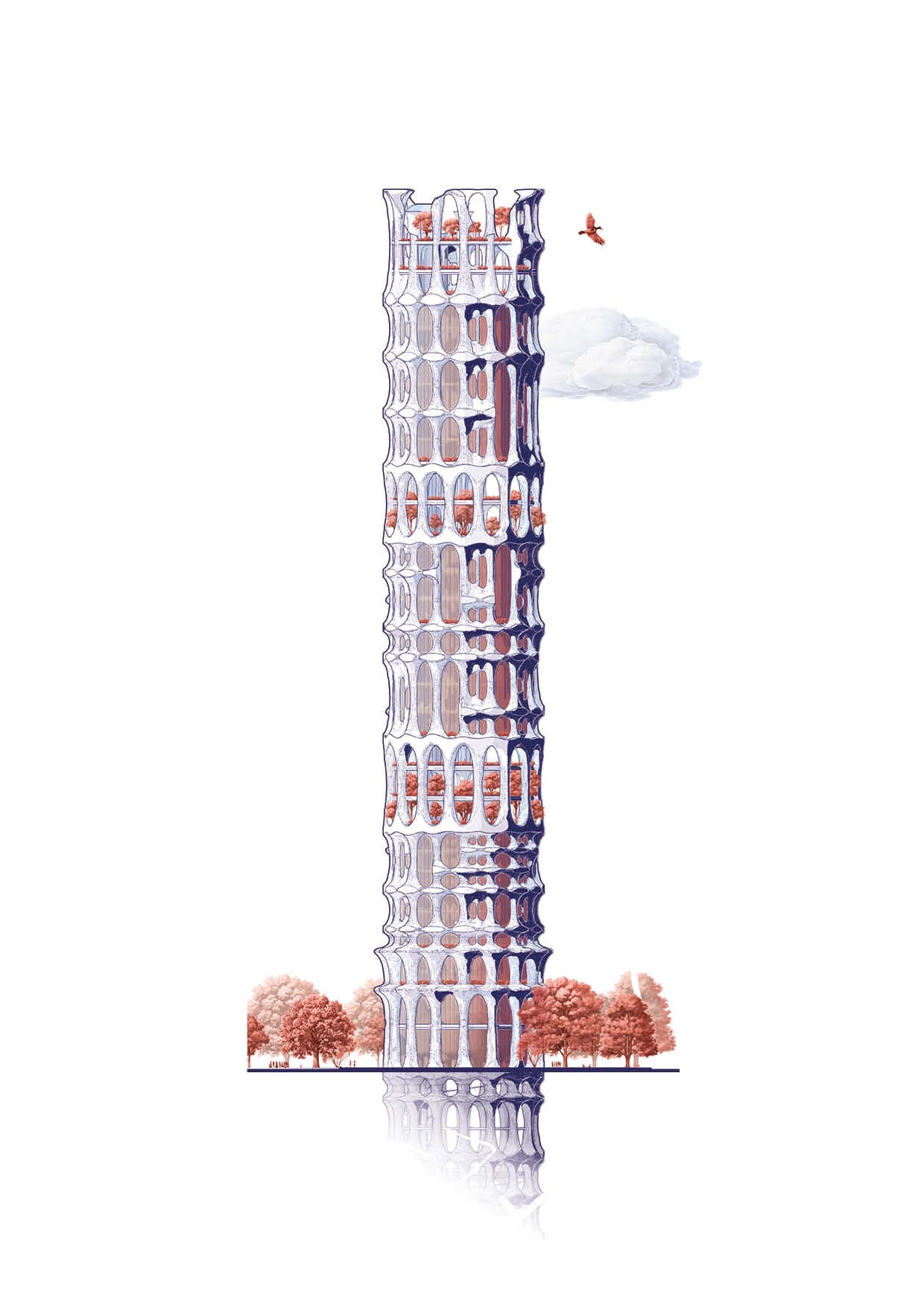
The first and the last relation to the body. Viewing, preparing, cremating, returning the ashes.
The platform of moments of communitas: the encounter, the shared rite, the threshold.
The sky garden: the ashes poured into the central void, planted mezzanines open onto the landscape.
The PFE boards, unrolled
7 boards, defence 2026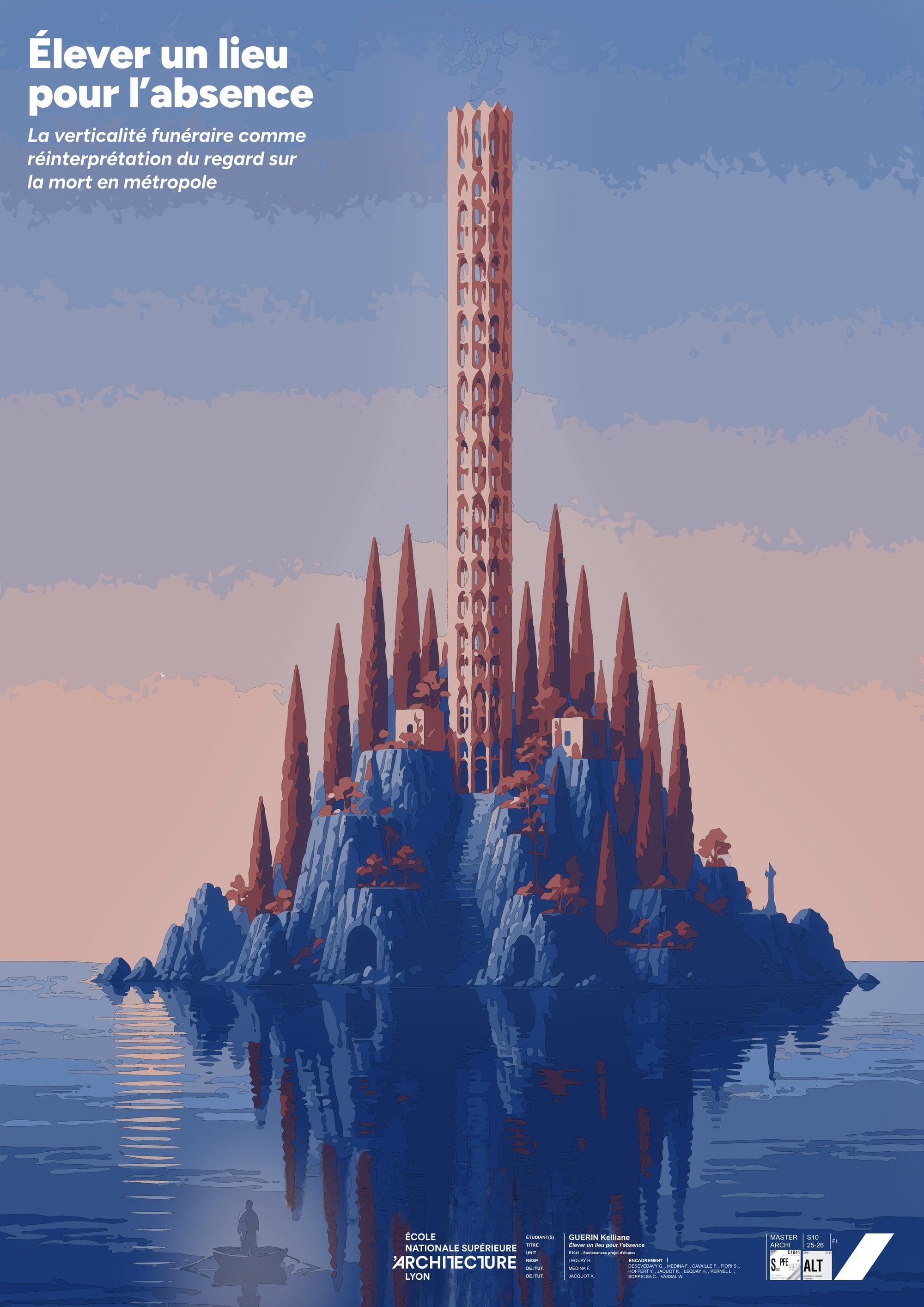
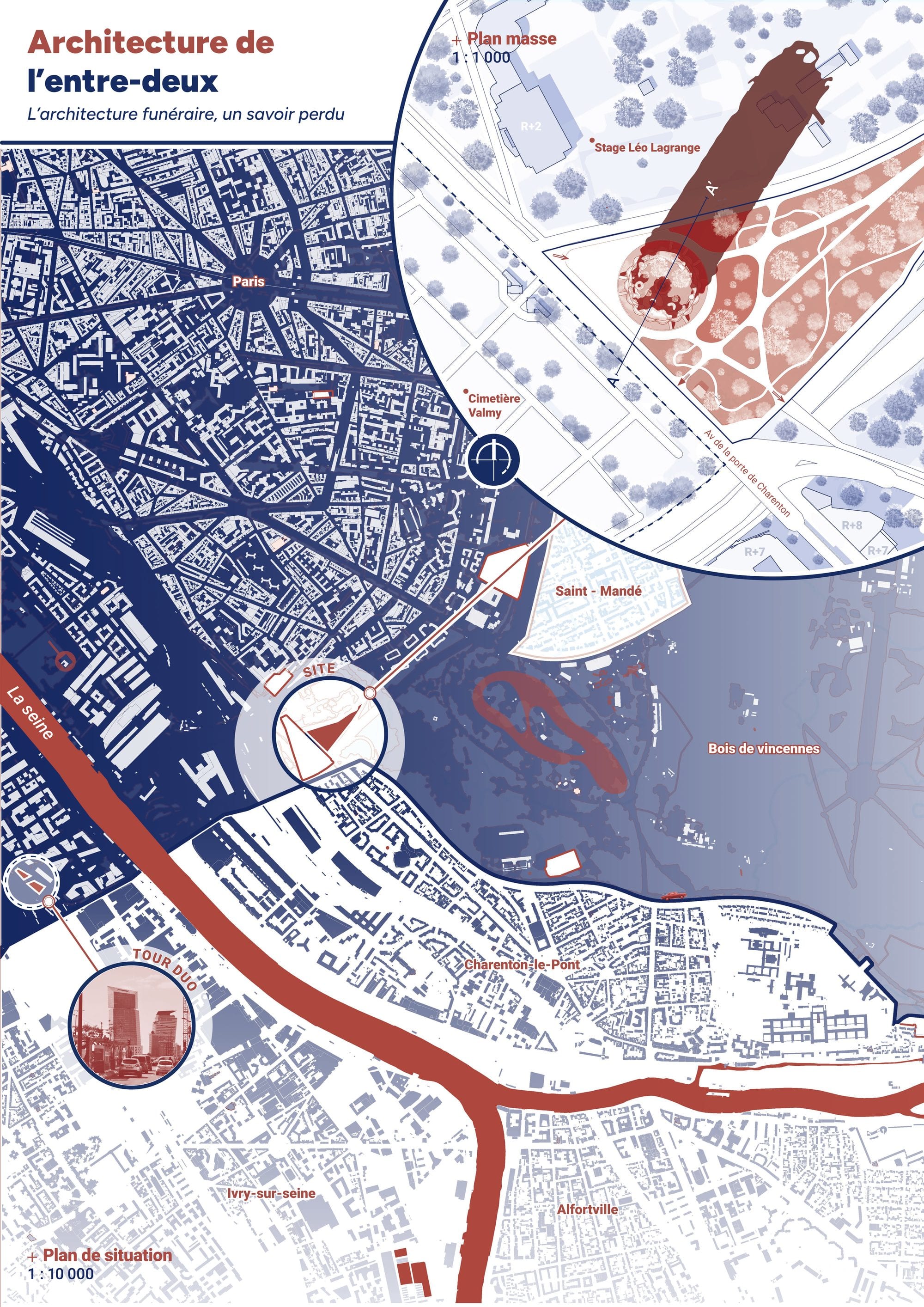
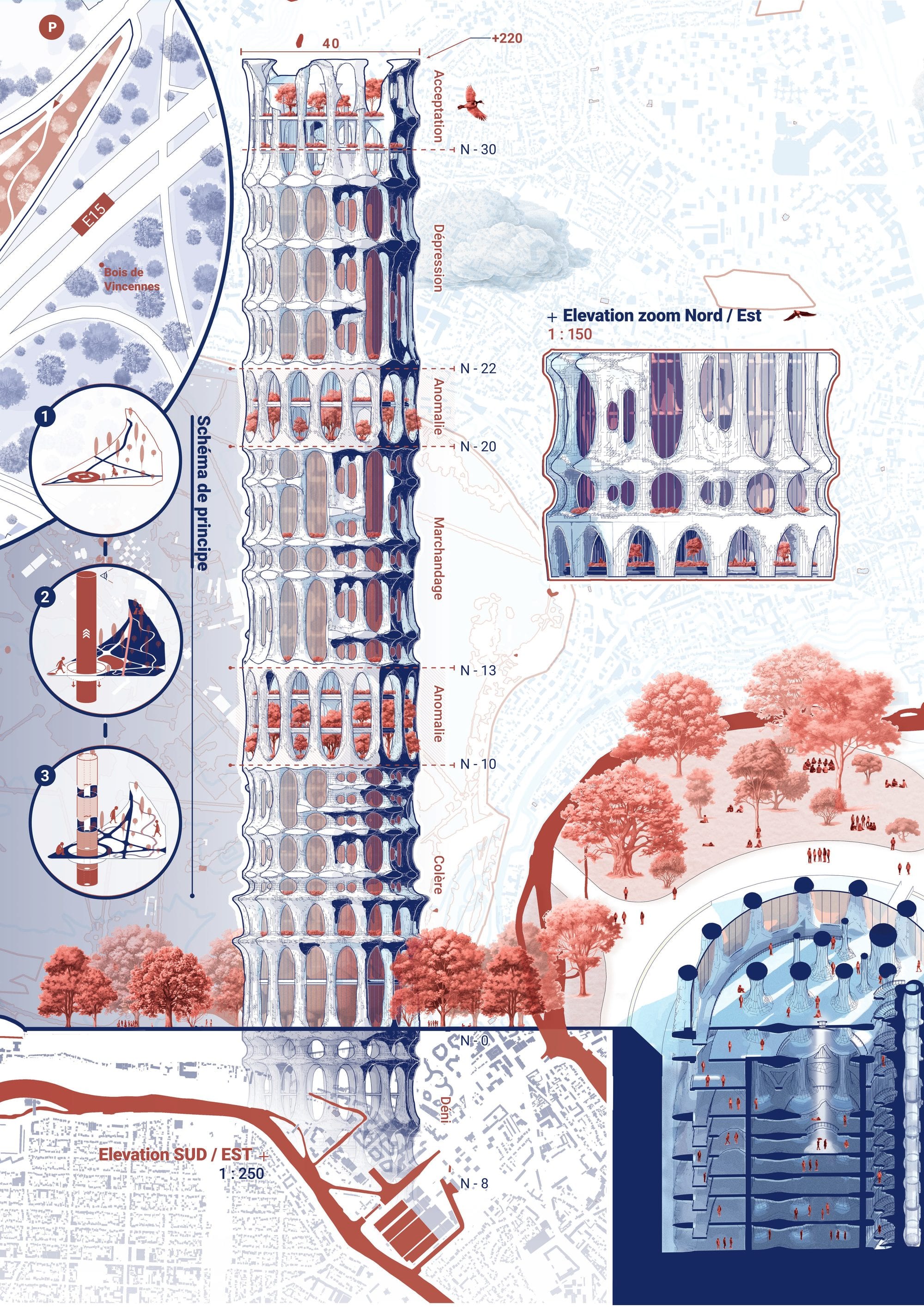
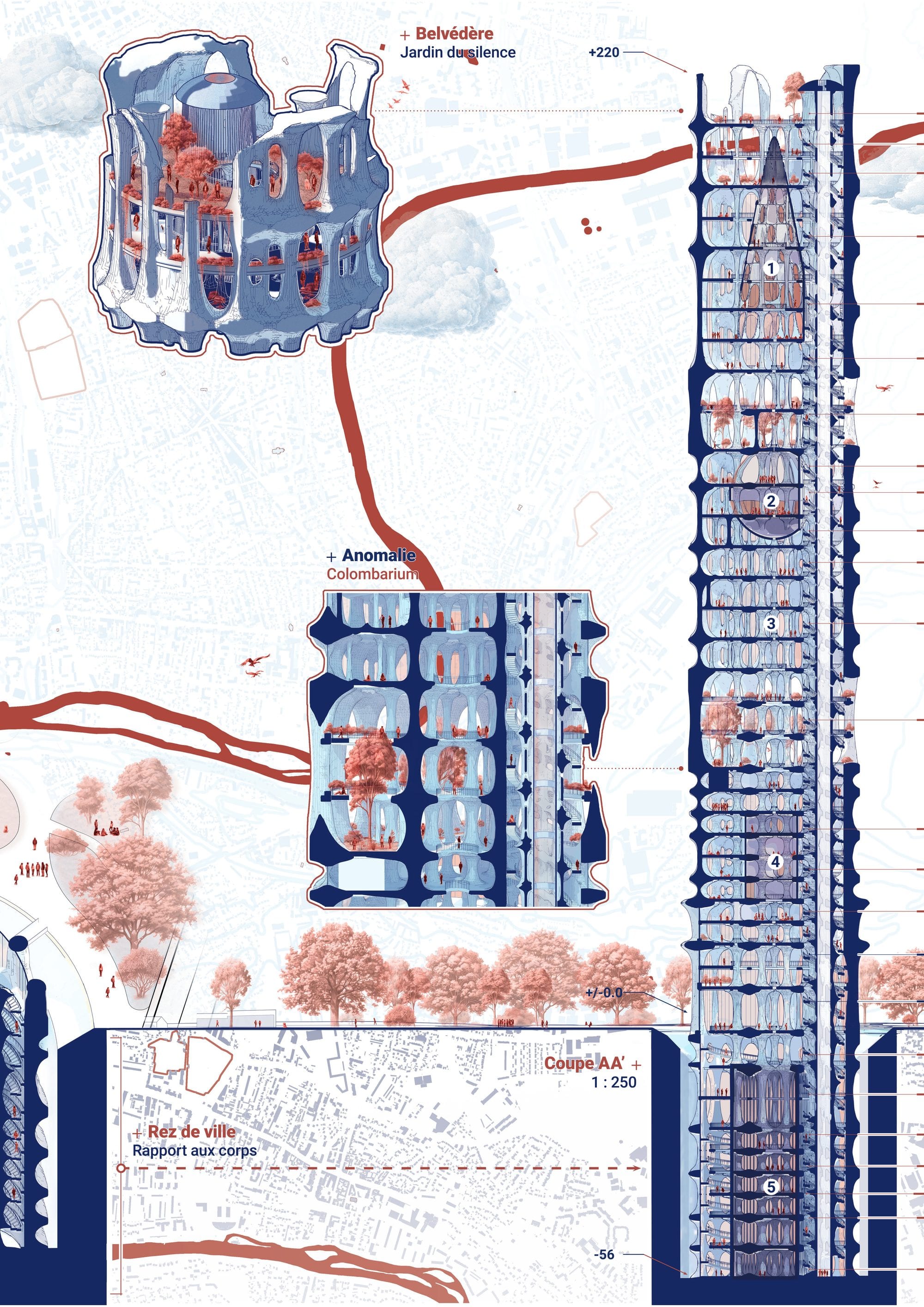
From words to code
Spatial intentions are written out in full, translated into geometric data, then converted into Python code sent straight into Blender. The code feeds the meshes and the column layouts: it tests in a few hours what a physical model would have taken weeks to show. AI served as a tool, not as a substitute, and its results were put to the test of practice.
Code is not a tool, it is an intermediate language between the intuition that cannot be put into words and the matter that cannot be invented. AI translates, it does not decide.
- The sensible
Three poems written without yet knowing they would become a project. Marche Viscérale, Matière et Silence, Architecture. Starting from the sensible, and owning it.
- The atlas
Images gathered before any reading. Blame!, Evangelion, Laputa, Böcklin’s L’Île des morts. Verticality and death bind together before any theory.
- The hand
Models, linocut, collage, drawing. Nine months of back-and-forth. Thinking with the hand as much as with words.
- Image AIan admitted failure
Image generation: unbuildable proposals. Generative image AI failed, and that failure confirmed that rightness comes through the hand.
- Parametric codewhat worked
Python, Blender, nearly 5,500 lines. Morphogenesis of hundreds of columns, each one different, in a few hours. Parametric AI succeeded.
- The viewer
The tool for naming and designing. From the smallest element to the urban landmark, everything can be named. For it is to names that words attach.
Explore the tower
The viewer developed for the defence: browse the strata of the tower, from Sky to Basement, plans, sections and annotated programmes, in full screen.
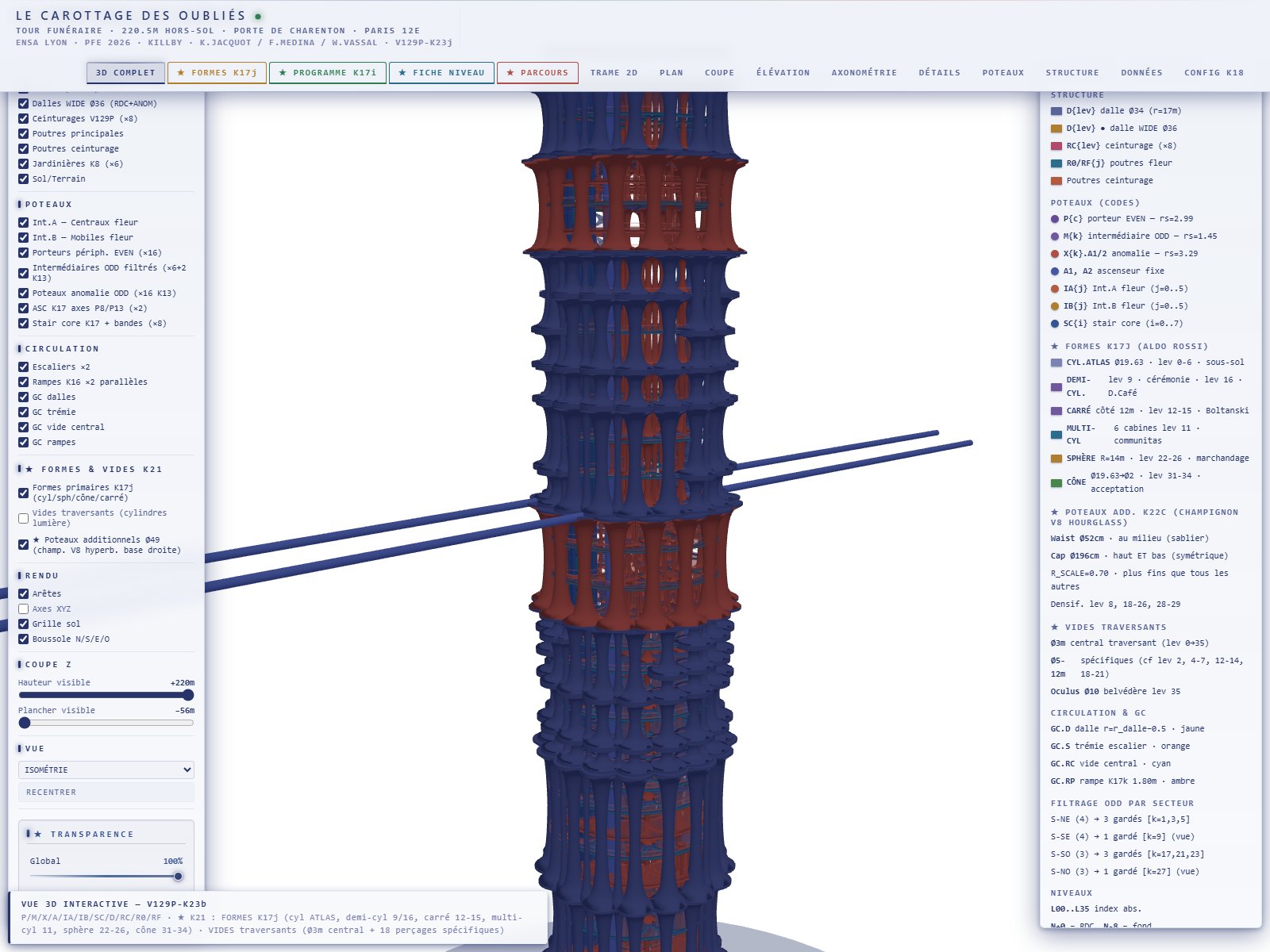
Opens full screen in a new tab, this page stays open.
AI did not design the project. It widened my imagination, sped up the test loops, codified each element.
The models, testing the material